


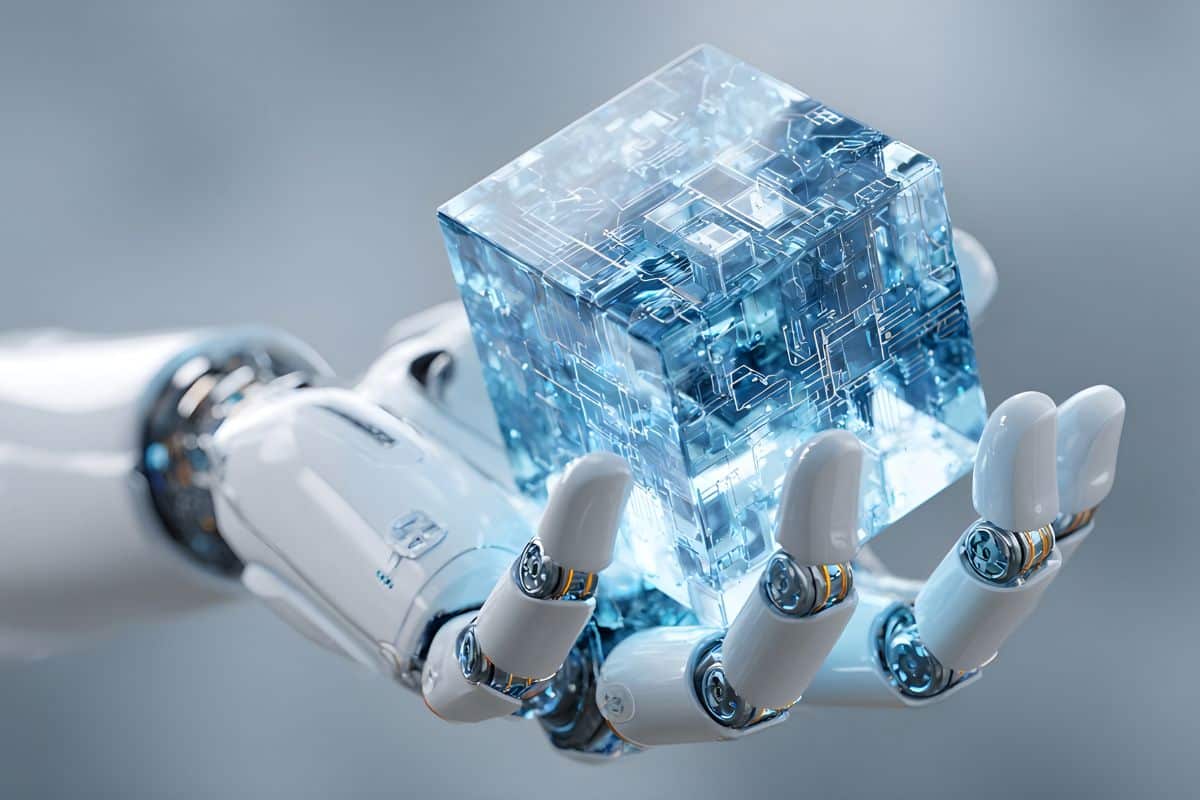
The next big technological leap after AI
For a few years, we talked about artificial intelligence as the next great technological revolution. Then the revolution actually arrived. Today we write with chatbots, generate images in seconds, delegate parts of our work to algorithms, and are beginning to see systems capable of acting with a level of autonomy that seemed unthinkable not long ago.
At this point, it is almost inevitable to wonder what comes next. The obvious answer might be quantum computing, humanoid robotics, biotechnology, or perhaps nuclear fusion. All credible candidates, but maybe we are asking the wrong question.
The next leap may not have a precise name at all. It could emerge from the convergence of technologies that, until now, we have treated as separate worlds. The trend is already visible: AI, robotics, engineered biology, advanced materials, quantum computing, and new energy systems are beginning to influence one another. And it is precisely at these intersections that some of the most important innovations of the coming years could emerge.
When AI leaves the screen
To understand where we are heading, robotics is a good place to start. Until recently, an industrial robot was essentially an extremely precise machine with very limited adaptability. AI is changing that model.
So-called physical AI systems aim to perceive their surroundings, interpret them, and act accordingly. This is not just about building humanoid robots capable of walking around a factory. It means bringing a form of intelligence into the physical world: autonomous warehouses, agricultural machinery, robotic laboratories, medical devices, and industrial systems capable of adapting to changing situations.
It is no coincidence that intelligent robotics is now one of the fields attracting significant investment and research.
When software meets biology
Another revolution could take place somewhere far less visible: the laboratory.
AI can already analyze molecular structures, simulate interactions, and dramatically reduce the number of experiments required during research. At the same time, genomics, synthetic biology, and personalized medicine continue to advance.
The result could be a fundamental change in how we develop drugs and biological materials. Technologies such as personalized mRNA cancer vaccines, new drug delivery systems, and precision fermentation suggest that the boundary between information technology and biology is becoming increasingly blurred.
What about quantum computing?
It remains perhaps the most fascinating candidate. A sufficiently advanced quantum computer could tackle certain categories of problems that are extremely difficult for conventional machines, from molecular simulation to the optimization of complex networks and systems.
But we are not yet looking at the “new PC.” Today’s systems still need to overcome major challenges involving scalability, noise, and error correction before they can fully express their potential.
Once again, however, the most interesting part may be the intersection. Quantum computing and AI, for example, could accelerate each other’s development, while quantum simulation is already attracting considerable interest in areas such as pharmaceutical research.
The real revolution may be convergence
The history of technology has taught us to look for a protagonist. The PC, the Internet, the smartphone, the cloud, artificial intelligence.
This time, things might be different.
The next great leap could happen when an artificial intelligence designs a molecule, a quantum computer simulates some of its properties, a robotic laboratory tests it automatically, and new manufacturing systems produce it on an industrial scale.
Individually, these are technological advances. Connected together, they become something else entirely.
Perhaps, then, we are not waiting for the technology that will come after AI. We are waiting for the moment when AI meets everything else.